 Skip to main content
 Back to Articles
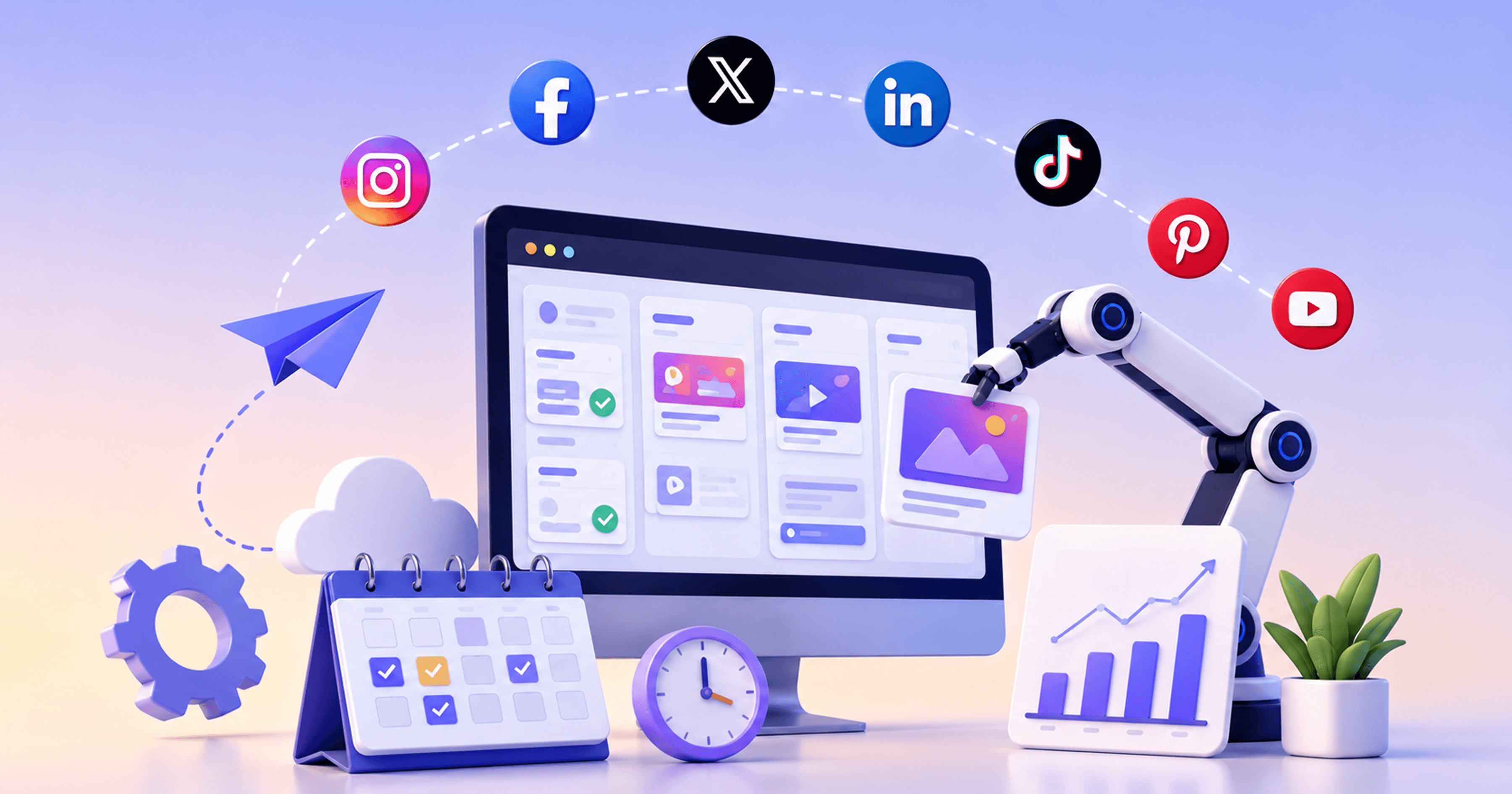
Social media marketing has become one of the most demanding parts of running a modern business. Managing multiple platforms, maintaining consistent posting schedules, creating engaging content, and tracking analytics manually can quickly overwhelm marketing teams.
To solve these challenges, businesses are increasingly adopting social media automation tools that simplify publishing workflows, improve productivity, and help brands scale their online presence more efficiently.
In this guide, we’ll explore the best social media automation tools in 2026, essential features businesses should look for, and how AI-powered automation is reshaping digital marketing workflows.
Why Social Media Automation Matters in 2026
Social media marketing now requires:
- Faster publishing workflows
- Multi-platform content management
- Consistent posting schedules
- Audience engagement tracking
- AI-assisted content creation
Businesses that manage social media manually often struggle with:
- Missed posting schedules
- Content inconsistency
- Workflow inefficiencies
- Time-consuming campaign management
Automation platforms solve these problems by centralizing social media management and reducing repetitive manual tasks.
What Makes a Great Automation Tool?
The best social media automation tools do more than simply schedule posts.
Modern platforms should help businesses:
- Plan campaigns visually
- Generate AI-assisted captions
- Publish across multiple channels
- Track engagement analytics
- Collaborate with teams
- Optimize content workflows
Scalability and workflow flexibility are now essential for growing brands and agencies.
Key Features Businesses Should Prioritize
Unified Dashboard
Managing all social platforms from one interface improves productivity and reduces operational complexity.
AI Content Assistance
AI-powered features help businesses:
- Generate captions
- Create content ideas
- Suggest hashtags
- Optimize publishing times
This accelerates content production while maintaining consistency.
Advanced Scheduling
Businesses should look for:
- Bulk scheduling
- Queue-based publishing
- Recurring posts
- Multi-platform scheduling
Collaboration Features
For agencies and teams, important features include:
- User roles
- Approval workflows
- Shared workspaces
- Client management
Performance Analytics
Analytics dashboards help businesses monitor:
- Reach
- Engagement
- Audience growth
- Campaign performance
These insights improve future marketing strategies.
Best Social Media Automation Tools in 2026
ZunoSync
ZunoSync is an AI-powered social media automation platform designed for businesses, creators, and marketing agencies. The platform focuses on simplifying social media workflows through:
- AI-assisted scheduling
- Multi-platform publishing
- Content calendar management
- Team collaboration
- Automated publishing workflows
- Centralized campaign management
ZunoSync is particularly useful for brands looking to streamline content operations while maintaining consistent publishing across platforms.
Buffer
Buffer remains a popular scheduling platform known for its simplicity and clean publishing workflows.
Best suited for:
- Small businesses
- Creators
- Simple content scheduling
Its easy-to-use interface makes it accessible for teams with basic automation requirements.
Hootsuite
Hootsuite continues to serve larger businesses and enterprise teams that require advanced reporting and multi-account management.
Strengths include:
- Enterprise analytics
- Team collaboration
- Extensive platform integrations
Sprout Social
Sprout Social focuses heavily on engagement analytics and customer communication management.
Ideal for:
- Audience engagement
- Reporting
- Social listening
- Brand monitoring
Later
Later is widely used for visual-first platforms like Instagram and TikTok.
Its visual content calendar and media planning tools are particularly helpful for creators and ecommerce brands.
AI-Powered Automation and Content Scheduling
Artificial intelligence is now a core part of social media management.
Modern AI-powered automation tools can:
- Analyze engagement trends
- Predict optimal posting times
- Suggest content improvements
- Generate captions automatically
- Recommend hashtags
AI automation helps businesses scale content production while improving efficiency and consistency.
Best Automation Tools for Agencies
Marketing agencies require advanced workflow management features to manage multiple clients efficiently.
Important capabilities include:
- Multiple workspaces
- Approval systems
- Team permissions
- Shared calendars
- Client collaboration
- Analytics reporting
Automation platforms simplify campaign management and reduce operational workload for agency teams.
Best Automation Platforms for Small Businesses
Small businesses benefit from automation by:
- Saving time
- Reducing manual tasks
- Improving posting consistency
- Managing campaigns more efficiently
The best tools for smaller businesses should provide:
- Easy onboarding
- Affordable pricing
- AI-assisted scheduling
- Multi-platform support
Common Problems Businesses Face Without Automation
Inconsistent Posting
Irregular posting negatively affects:
- Engagement
- Audience trust
- Brand visibility
Automation ensures consistent publishing schedules.
Manual Workflow Overload
Managing content manually across several platforms becomes difficult as businesses scale.
Automation reduces repetitive publishing tasks.
Lack of Content Organization
Without structured workflows, businesses struggle to maintain organized content calendars and campaigns.
Automation platforms centralize campaign planning.
How to Choose the Right Automation Tool
Before selecting a social media automation platform, businesses should evaluate:
- Team size
- Publishing volume
- AI requirements
- Analytics needs
- Collaboration workflows
- Budget
- Scalability
The ideal platform should support both current operations and future growth.
Future Trends in Social Media Automation
Social media automation technology will continue evolving rapidly with:
- Predictive AI scheduling
- AI-generated campaign optimization
- Advanced audience analytics
- Automated engagement recommendations
- Smarter workflow automation
Businesses adopting AI-powered marketing workflows early will gain significant competitive advantages in the coming years.
Final Thoughts
Social media automation tools have become essential for businesses looking to scale digital marketing efficiently in 2026. AI-powered platforms simplify scheduling, improve workflow organization, and help brands maintain consistent online engagement.
Whether you are a startup, marketing agency, ecommerce business, or creator, automation platforms can significantly improve productivity and campaign management.
Modern solutions like ZunoSync help businesses centralize publishing, automate workflows, and streamline multi-platform social media management using AI-powered automation technologies.
Frequently Asked Questions
1. What are social media automation tools?
Social media automation tools help businesses schedule, publish, manage, and analyze content automatically across multiple social media platforms.
2. Why should businesses use social media automation tools?
Businesses use automation tools to save time, improve posting consistency, streamline workflows, and manage multiple social media accounts more efficiently.
3. What features should a social media automation platform include?
A modern social media automation platform should include:
- AI scheduling
- Content calendars
- Multi-platform publishing
- Analytics dashboards
- Team collaboration
- Workflow automation
4. Can AI generate social media captions automatically?
Yes. AI-powered tools can generate captions, hashtags, content ideas, and optimized publishing suggestions for social media campaigns.
5. Which social media platforms support automation?
Most automation platforms support:
- TikTok
- X (Twitter)
6. Are social media automation tools useful for agencies?
Yes. Marketing agencies use automation tools to manage multiple client accounts, collaborate with teams, schedule campaigns, and track analytics from a centralized dashboard.